
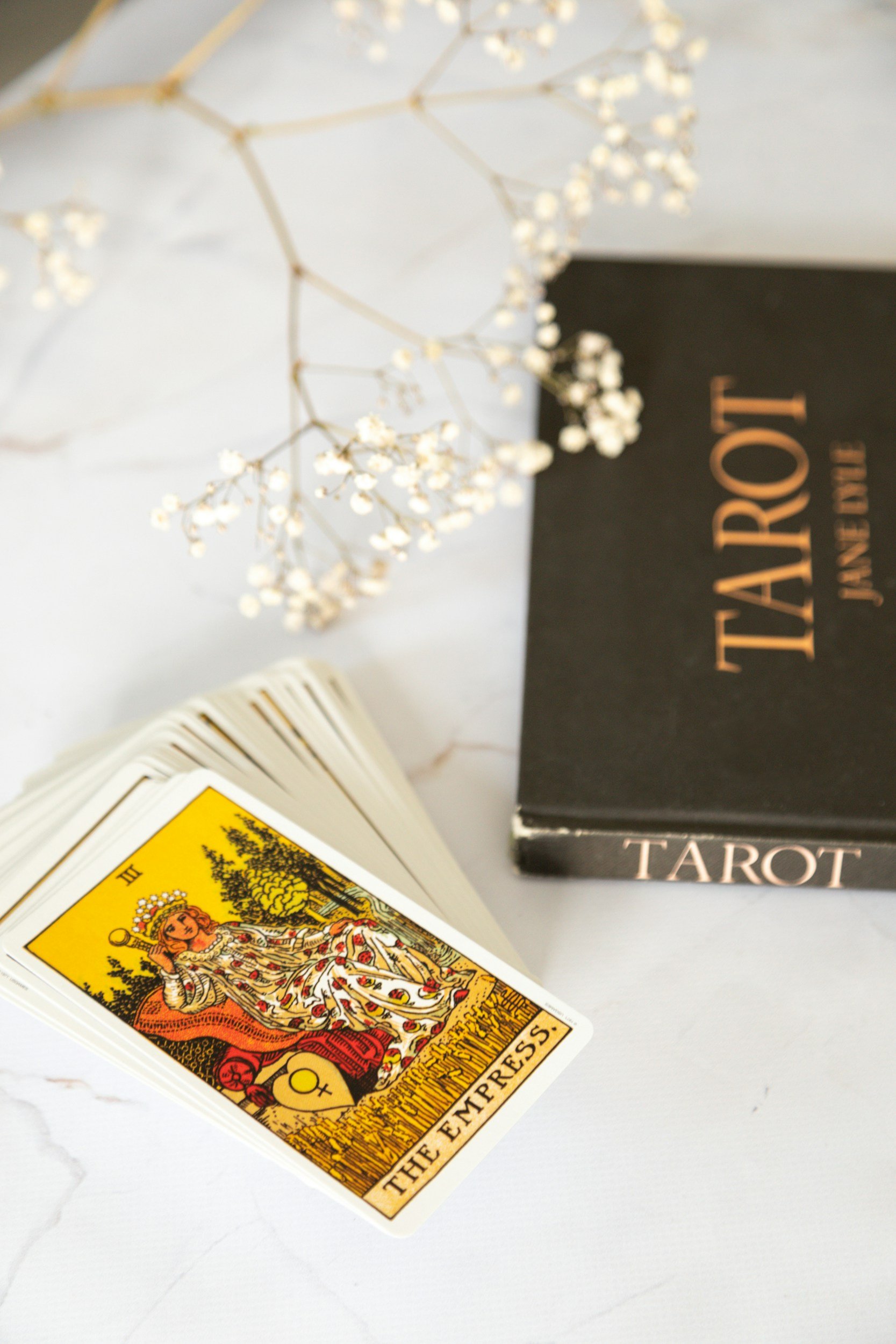
Tarot is increasingly being used as a tool for self-reflection, personal growth, and therapeutic exploration. While tarot cards are often associated with fortune-telling or spirituality, they can also be used in a much more grounded way—as visual and narrative tools that help people explore their thoughts, emotions, and experiences.
In therapy, tarot can provide an additional lens for exploring questions that may be difficult to put into words. For people seeking therapy for eating disorders, for example, creative approaches can sometimes help create space for reflection beyond the focus on food, weight, or symptoms.
Why Tarot Can Be Helpful in Therapy
People are meaning-making by nature. We naturally look for patterns, create stories, and use symbols to make sense of our experiences. Art and narrative can offer powerful ways to explore those stories, particularly when something feels difficult to explain through words alone.
Tarot cards provide visual imagery that can guide meditation and self-reflection. A particular image, symbol, or story may bring an unexpected thought or emotion to the surface. Rather than treating the cards as predictions of the future, a therapist might use them as prompts for questions such as: What does this image bring up for you? What do you notice about yourself in this card? What story are you telling yourself about this experience?
This process can encourage curiosity, self-compassion, and a deeper understanding of one's internal world.
Tarot can also be especially useful when working from a wholistic eating disorder care perspective. Healing is about more than changing behaviors around food. It can involve reconnecting with identity, values, relationships, emotions, and a sense of self. Creative tools like tarot may provide another way to explore these areas.
Books About Tarot for Self-Reflection
If you're interested in learning more about using tarot as a tool for personal growth, there are several resources worth exploring:
● Tarot for Change by Jessica Dore, a licensed social worker, explores the cards as tools for self-care, acceptance, and personal growth. Dore draws on psychology, storytelling, and traditional tarot imagery to encourage readers to approach the cards as invitations for reflection.
● Tarot for Self Care by Minerva Siegel offers practical ways to incorporate tarot into self-care and personal reflection. The book provides prompts and practices that can help readers develop a more intentional relationship with themselves.
Exploring Tarot in Therapy
Tarot is not a replacement for evidence-based mental health treatment, and it doesn't need to be used in a spiritual or predictive way to be meaningful. When incorporated thoughtfully, it can simply be another creative tool for exploring emotions, identity, values, and personal narratives.
Therapy can take many forms, and healing doesn't always happen through conversation alone. Sometimes an image, story, or symbol can help us see something about ourselves in a new way.
If you're looking to explore more, therapy can help. If you're located in MA, RI, VT, or NH, I may be able to help. Contact me today for a free consultation to learn more about treatment for eating disorders.
